


Color Temperature Explained: How to Choose the Right Light for Every Room

Man browsing light bulbs and comparing Kelvin temperature.
Updated 1/30/26 by 1000Bulbs Staff
Have you ever replaced a light bulb and immediately thought, “Why does this look different?” Even when brightness is the same, the color of the light can completely change how a room feels. That difference usually comes down to color temperature — one of the most important, and most misunderstood, lighting specifications.
Understanding color temperature helps you choose bulbs that look right, feel comfortable, and function properly in your space. Whether you are lighting a living room, kitchen, bathroom, or workspace, choosing the right color temperature can make your home feel warmer, brighter, calmer, or more productive.
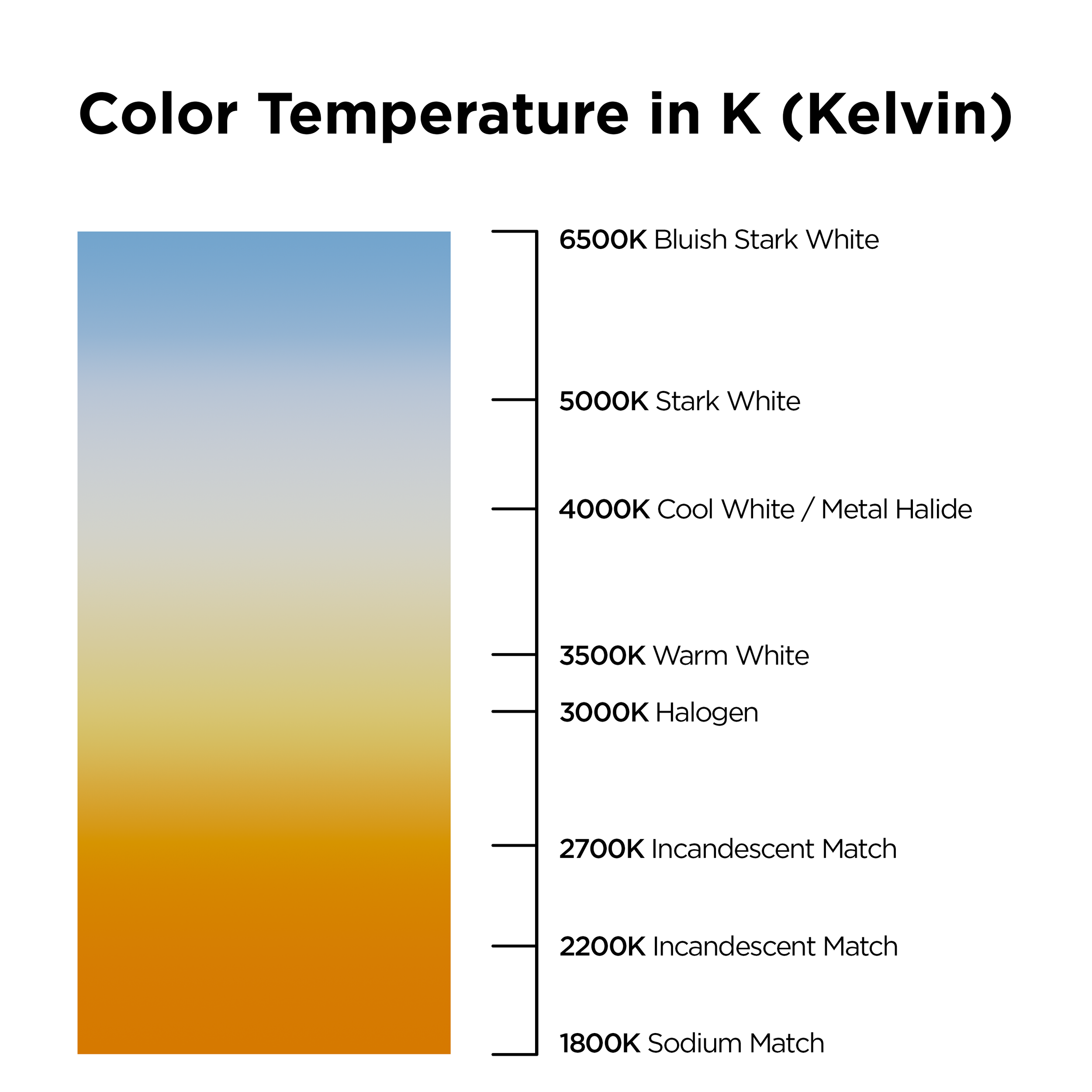
Kelvin color temperature scale.
What Is Color Temperature?
Color temperature describes the appearance of light emitted by a bulb, measured in degrees Kelvin (K). It does not describe how hot a bulb gets. Instead, it tells you whether the light will appear warm and yellow, neutral and white, or cool and blue-toned.
Lower Kelvin numbers create warmer light, while higher Kelvin numbers create cooler light. Most residential lighting falls between 2700K and 6500K, and this range covers nearly every home lighting need.
Why Color Temperature Matters in Your Home
Color temperature affects how a space feels, how well you see, and how colors appear. The wrong color temperature can make a room feel harsh, dim, or uncomfortable, even if the light is technically bright enough.
Using consistent color temperatures throughout a room also prevents mismatched lighting. Mixing warm and cool bulbs in the same space can create uneven tones and visual distraction, especially in open floor plans.
Understanding the Kelvin Scale
The Kelvin scale helps you compare light colors objectively. Here’s how the most common ranges are used in real spaces:

Warm White (2700K–3000K)
Produces soft, yellow-toned light similar to traditional incandescent bulbs. This range creates a relaxed, welcoming atmosphere and works best in:
Living rooms
Bedrooms
Dining rooms
Hotels and hospitality spaces


Neutral White / Cool White (3500K–4500K)
Offers a clean, balanced white light without strong yellow or blue tones. This range is ideal for:
Kitchens
Bathrooms
Laundry rooms
Hallways and task areas


Daylight (5000K–6500K)
Creates crisp, blue-white light that mimics midday sunlight. This range improves contrast and visibility, making it best for:
Home offices
Garages and workshops
Retail and commercial spaces
Task-heavy environments.
NEW: How Color Temperature Impacts Paint, Décor, and Finishes
Color temperature does not just affect lighting — it changes how everything in the room looks. Warm light enhances reds, browns, and warm neutrals, making spaces feel cozier. Cool light sharpens whites, grays, and blues, which can make a space feel cleaner but also more clinical if overused.
This is especially important when choosing lighting for newly painted rooms or remodeled spaces. A wall color that looks perfect under warm lighting may appear flat or gray under cooler bulbs. Matching color temperature to your finishes helps prevent costly lighting mistakes.

Man installing vintage LED light bulb in a pendant fixture.
Tips for Choosing the Right Color Temperature
Start with how the room is used, not just how you want it to look.
Relaxation spaces benefit from warmer tones
Task-focused spaces benefit from neutral or cool tones
Detail-oriented work areas benefit from daylight tones
Always check the Kelvin rating on the bulb packaging or product page. Brightness (lumens) and color temperature work together — one does not replace the other.
Frequently Asked Questions About Color Temperature
What color temperature is best for home lighting?
Most homes use a mix of color temperatures. Warm white (2700K–3000K) works well for living areas and bedrooms, while neutral white (3500K–4000K) is better for kitchens and bathrooms.
Is higher Kelvin brighter?
No. Kelvin measures color, not brightness. Brightness is measured in lumens. A 2700K bulb and a 5000K bulb can be equally bright but look very different.
Can I mix color temperatures in my home?
Yes, but avoid mixing them within the same room. Using different color temperatures in different rooms is fine, but consistency within each space creates a cleaner look.
What color temperature is closest to incandescent bulbs?
2700K most closely matches traditional incandescent lighting. This is a popular choice for people switching to LED but wanting the same warm glow.
Is daylight lighting bad for your eyes?
Not when used appropriately. Daylight bulbs are excellent for task-oriented areas, but using them in bedrooms or living rooms can feel harsh or overstimulating.